

-
SHARE
- X (Twitter)
STATEMENT
People living in the aftermath of disaster; people staying close to them; people keeping those memories alive. Across many different places I have met such people—those who give voice to their experiences and pass them on, so that what they have lived through does not quietly fade away. Drawing strength from knowing that we share the same present, and from seeing them persist quietly and often unnoticed, I have had the privilege of filming them with my camera. I try to hold not only what can be seen in their actions, but also the time that gathers in their rooms, the slow changes in the landscape, and the warmth that travels through their voices.
Living in the same regions, or returning there again and again, has kept me close to the everyday lives of the people I wanted to film. Watching the ways others live has gradually turned my attention toward what I had been overlooking at the margins of my own daily life, and toward what I still hope to tend to, even if it already feels too late. Although I myself have not been directly struck by a major disaster, in small rural towns I have become aware of what is slowly being worn away, and of what is handed on, changing shape as it goes. Out of that awareness, and with this chance to share the work, I began to bring together the people and places I am now privileged to be filming, as a record of the present moment.
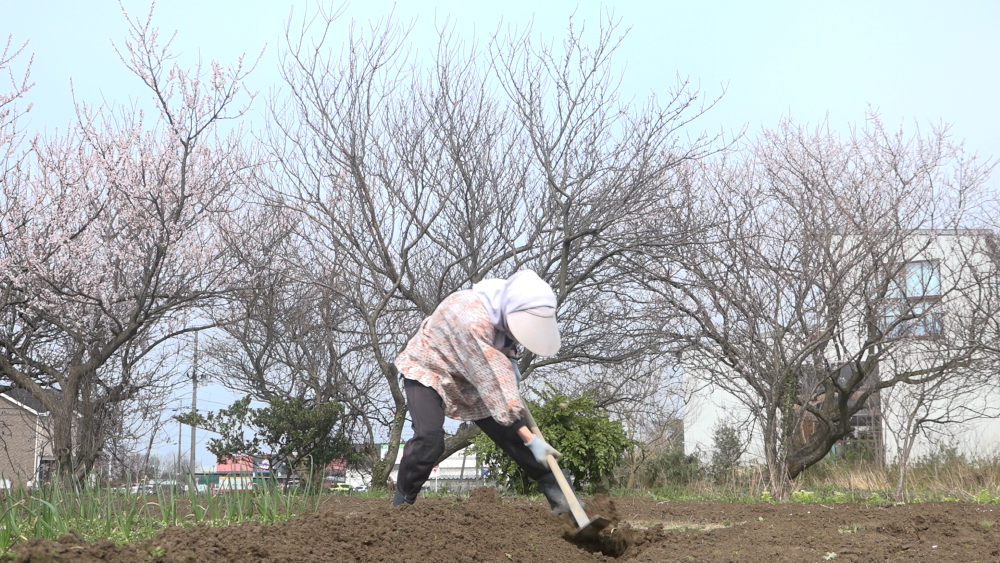
One strand of this work follows the daily life of Nakamura Minako, who lives in Agano City, Niigata Prefecture. She is the younger sister of Hatano Hideto, the main figure in Spring, On the Shores of Aga, which I presented last year, and has long been someone I owe a great deal to, always looking out for me since I first began visiting Aga. In the spirit of the way her mother lived, she works her fields, makes dried persimmons, and, without going against the seasons or the weather, quietly resists the pressures of society from within the texture of everyday life—or so it seems to me.
Another strand of the work begins in Jina, Kawanehoncho, Shizuoka Prefecture, where my father’s family home is located. This is a tea-growing region, and in my family my parents and relatives have long worked as part-time farmers, tending the tea fields together. Last year, however, the decision was made to close the processing factory, casting doubt over the future of tea production for everyone in Jina. This strand of filming grew out of a personal wish to hold on to a tea-field landscape I had always taken for granted, and my camera now also turns toward members of the Komori family.
During March, when this exhibition is on view, we come to the fifteenth anniversary of the Great East Japan Earthquake. A year after the disaster, I moved to Rikuzentakata, and every now and then I would simply walk with my camera, filming the landscape as I went. Even once the visible traces have gone, what happened here still lingers somewhere in the land. The people of Rikuzentakata, and the landscape that surrounds them, taught me that.
Guided by the places where someone once stood and looked out, and by memories they entrusted to me, I would set the camera down and begin to film. That experience has shaped the way I now turn my camera toward other landscapes, in towns that bear the marks of disaster. It has also led me to look again at the records of landscapes I have been making all this time. I hope that, between these records and the memories and experiences carried by those who encounter the work, there may be quiet moments of resonance.
ABOUT THE WORK
KOMORI Haruka
Please eat, Oagarincho, 2026, 56min 53sec.
Someone was often singing in the tea fields, 2026, 37min 59sec.
Works

Please eat, Oagarincho
Please eat, Oagarincho, 2026 / Installation / 56min 53sec. / Color, sound / Dialogue in Japanese with English sbtitle
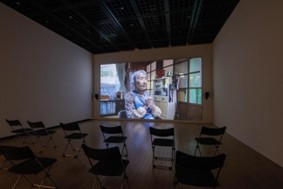
Someone was often singing in the tea fields
Someone was often singing in the tea fields, 2026, Installation/37min. 59sec./Color/Sound/Dialogue in Japanese with English subtitles
![SATO Makoto, <i>Living on the River Agano (Aga ni ikiru)</i> [Commission Project Special Program 1]](https://www.yebizo.com/wp-content/uploads/sites/6/2026/01/others/ud/scr06_w_aganiikiru_dummy.jpg)
![SATO Makoto, <i>Memories of Agano (Aga no kioku)</i> [Commission Project Special Program 2]](https://www.yebizo.com/wp-content/uploads/sites/6/2026/01/others/ud/scr07_w_aganokioku_dummy.jpg)
![Komori Haruka, <i>Spring, On the Shores of Aga </i>[Commission Project Special Program 3]](https://www.yebizo.com/wp-content/uploads/sites/6/2026/01/others/ud/eb65988208ab91adfb39cf970bdcc8ed.jpg)